
At the start of this year, I took charge of a replacement region – one with hugely varying and diverse cultures – and that I have quickly seen for myself how technology is adopted in several ways and the way countries are digitally divided by access and availability.

Many facets of worldwide communications today are influenced by cultural differences – be it email, Skype, social media, or the phone. In my experience, no matter your preferences, the key to communicating successfully is knowing and respecting all of our differences to enable a positive impact.
The Human Touch
We, humans, are social animals. Technology can’t replace human interaction. we’d like to mix the human and digital elements to speak across our borders.
Between 70 and 80 percent of our communication is usually non-verbal, which is why we at Orange believe the importance of the human touch in digital transformation. visual communication is often a strong tool in business communications.
Despite all the technological marvels we’ve today, you’ll still achieve much by actually lecturing one another face to face. This, for me, underlines how we will combine digital transformation and private communication and put the “human” into technology.
Cultural divide
The cultural divide is additionally dictated by the various technological possibilities available and what users are allowed to use. In Europe, for instance, the web is employed for connecting business, and therefore the Internet of Things (IoT) is making rapid inroads into a variety of industries already. In areas of my region – in both Africa and Russia – there simply aren’t the connectivity speeds, or in some cases, connection capability, to form this happen. So we’ve to be more innovative while meeting the requirements of the user.
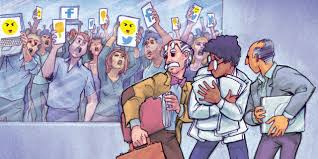
Of course, we have the worldwide leapfrogging phenomenon where technologically less-advanced countries jump generations of legacy technologies to adopt more advanced solutions. In some cases, building quality fixed networks were prohibitive, so regions ended up with mobile. Moscow is certainly before 4G compared to several European countries, and its users pay less. Muscovites pay but 10 euros for unlimited 4G.
This leapfrogging changes cultural heritage; using the newest technology that previous generations didn’t have changes mindsets. There also are discrepancies between developed and non-developed parts of nations that require to be taken under consideration when watching statistics. I used to be reading a piece of writing that reported 52 percent of Russian people said if they didn’t have the web tomorrow, it might not change their lives. Yet there are 900,000 software developers in Russia. this is often an enormous paradox.
There are initiatives, during which Orange helps, to deal with this. It supports the Digital India program, for instance, which was launched to digitally empower Indian people. At an equivalent time, Orange Healthcare is functioning on m-health solutions in Africa, where 62 percent of the population resides in rural areas. These solutions will bring critical services to the people.
Let’s talk
Technology and culture directly influence one another. As cultures change, so does the technology it innovates. Much of this is often for the greater good. It is, for instance, massive aid to global communication. But we must not forget the way to talk face-to-face and therefore the impact it can have on crossing the cultural divide.

